

Starting football as a beginner can feel overwhelming, yet focused training on three core areas—speed, stamina, and ball control—produces steady, noticeable improvement. Modern training approaches emphasize quality over volume, short high-intensity efforts that mirror the stop-start nature of the game, and deliberate practice with the ball. The following guidance draws on established methods used to develop these attributes safely and effectively for newcomers.
Building a Strong Foundation with Ball Control
Ball control is the skill that allows players to keep possession, receive under pressure, and create time and space. Beginners progress fastest when they first master basic touches before adding speed or decision-making.
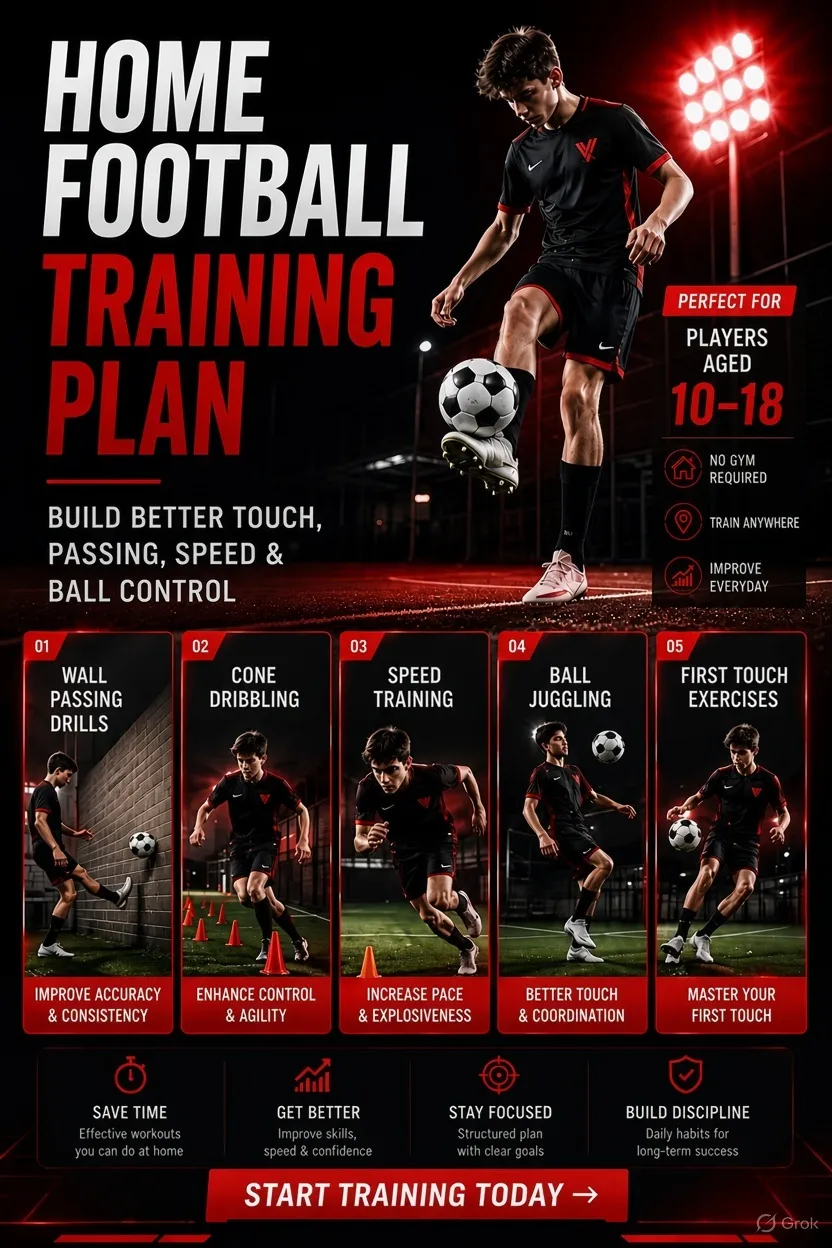
Simple ball mastery exercises form the starting point. Toe taps, sole rolls, inside and outside foot touches, and stationary juggling develop a feel for the ball. Practice these in short daily sessions, aiming for clean contact and balanced body position. Use both feet equally from the beginning; neglecting the weaker foot limits long-term development.
Cone or marker dribbling improves close control and change of direction. Set cones in a straight line or zigzag pattern and weave through them while keeping the ball within a short distance of the feet. Focus on soft touches and a low center of gravity. As comfort grows, increase the speed of movement while maintaining control. Wall passing is another highly effective solo drill: pass against a wall, control the return, and repeat with one-touch or two-touch variations. This builds first-touch quality and passing accuracy.
Once basic control feels reliable, introduce movement and mild fatigue. Dribble at a steady pace for short intervals, then accelerate while keeping the ball close. The goal is to maintain technique when tired, which directly transfers to match situations.
Developing Speed and Acceleration
Football speed is less about top-end sprinting over long distances and more about rapid acceleration, deceleration, and change of direction over 5 to 20 meters. Beginners should prioritize short, high-quality efforts with full recovery so that each repetition is explosive.
Standing-start or falling-start sprints of 8 to 15 meters train the first step. Focus on driving the knees, staying low initially, and pushing forcefully against the ground. Perform several repetitions with complete rest between efforts. Shuttle runs—sprinting to a marker, stopping or turning, and returning—develop the repeated acceleration and braking demanded in games.
Agility work complements linear speed. Cone drills such as the T-drill, simple slalom runs, or lateral shuffles followed by a short sprint improve the ability to change direction quickly while remaining balanced. Ladder or quick-feet patterns (high knees, side steps, or in-and-out movements) enhance foot speed and coordination when performed with precise technique.
Quality matters more than volume. Fatigue reduces sprint mechanics and increases injury risk, so keep speed sessions relatively short and ensure adequate rest. Pairing speed work with light ball control, such as a short dribble into a sprint, helps link physical and technical elements.
Improving Stamina for Match Demands
Football stamina differs from long-distance running endurance. Players need the capacity to repeat high-intensity efforts with incomplete recovery. Interval-based training is therefore more relevant than continuous steady jogging alone.
A practical approach uses shuttle or interval sprints. Examples include repeated 20-meter shuttles with short rest periods, or 20- to 30-second hard efforts followed by easy jogging or walking recovery. Beginners can start with fewer repetitions and longer rest, gradually increasing the work or reducing recovery as fitness improves. Fartlek-style running—mixing faster bursts into an easy continuous run—also builds the ability to change pace.
Incorporating the ball into conditioning is highly effective. Dribble intervals (fast dribbling for 20–30 seconds followed by slower recovery dribbling) train both fitness and technical quality under fatigue. Small-sided games, when available, provide excellent game-specific conditioning while developing decision-making.
Aim for two to three conditioning-focused sessions per week, balanced with recovery days. Progressive overload—slightly increasing distance, intensity, or reducing rest over time—drives improvement while minimizing the risk of overtraining.
Structuring Training and Staying Consistent
A balanced weekly approach for beginners might include ball mastery and technical work on some days, dedicated speed or agility sessions on others, and interval conditioning once or twice weekly. Always begin with a thorough warm-up that includes light movement, dynamic mobility, and progressive build-ups. Finish sessions with light movement and stretching.
Recovery is essential. Adequate sleep, hydration, and nutrition support adaptation. Listen to the body and reduce load if excessive fatigue or minor niggles appear. Technique should remain the priority; adding speed or intensity before control is reliable often leads to bad habits.
Progress is rarely linear. Tracking simple measures—such as the number of clean cone weaves, the quality of first touches against a wall, or the ability to complete a set of shuttles—provides tangible feedback and motivation. Training with a partner or small group can add accountability and make sessions more enjoyable, while solo work with a ball and a few markers remains highly productive.
Putting It into Practice
Beginners who consistently practice close ball control, short explosive accelerations with full recovery, and football-specific interval conditioning build a solid base for the game. Combining these elements—keeping the ball under control while moving at speed or when fatigued—produces the most transferable improvements. With patience, attention to technique, and gradual progression, new players can develop the speed, stamina, and ball control needed to enjoy the sport and continue improving over time.
Read more – gloryhouseworld.com